How we design bags that feel right from warm-up to final match. Ergonomic carry for players, staff, and events.
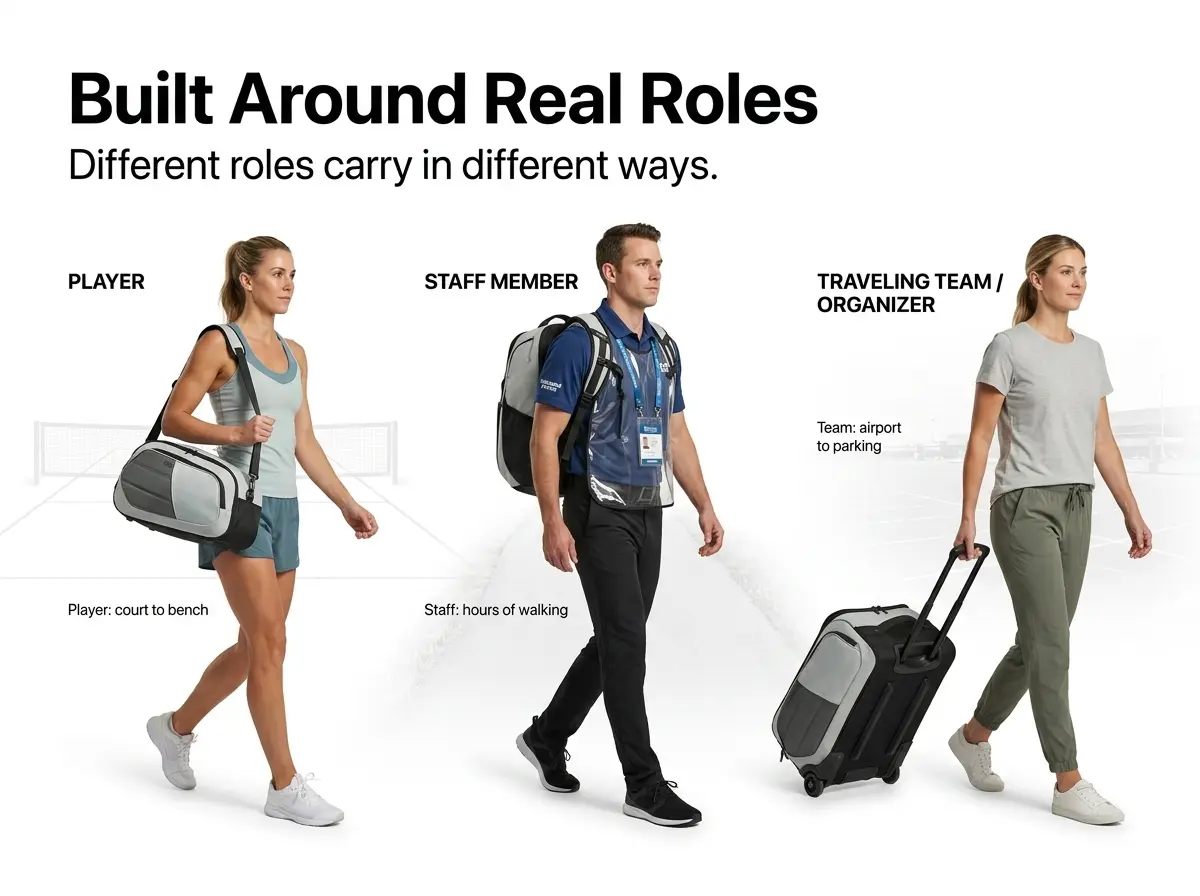
Tournament days are long. Players, staff, and officials move between courts, hotels, shuttles, and venues – often with a bag on their shoulder or in their hand the entire time. We design every HG Pickleball bag around real carry time, load, and movement, so it feels like the right tool for the day, not a burden.
Real‑Role Testing
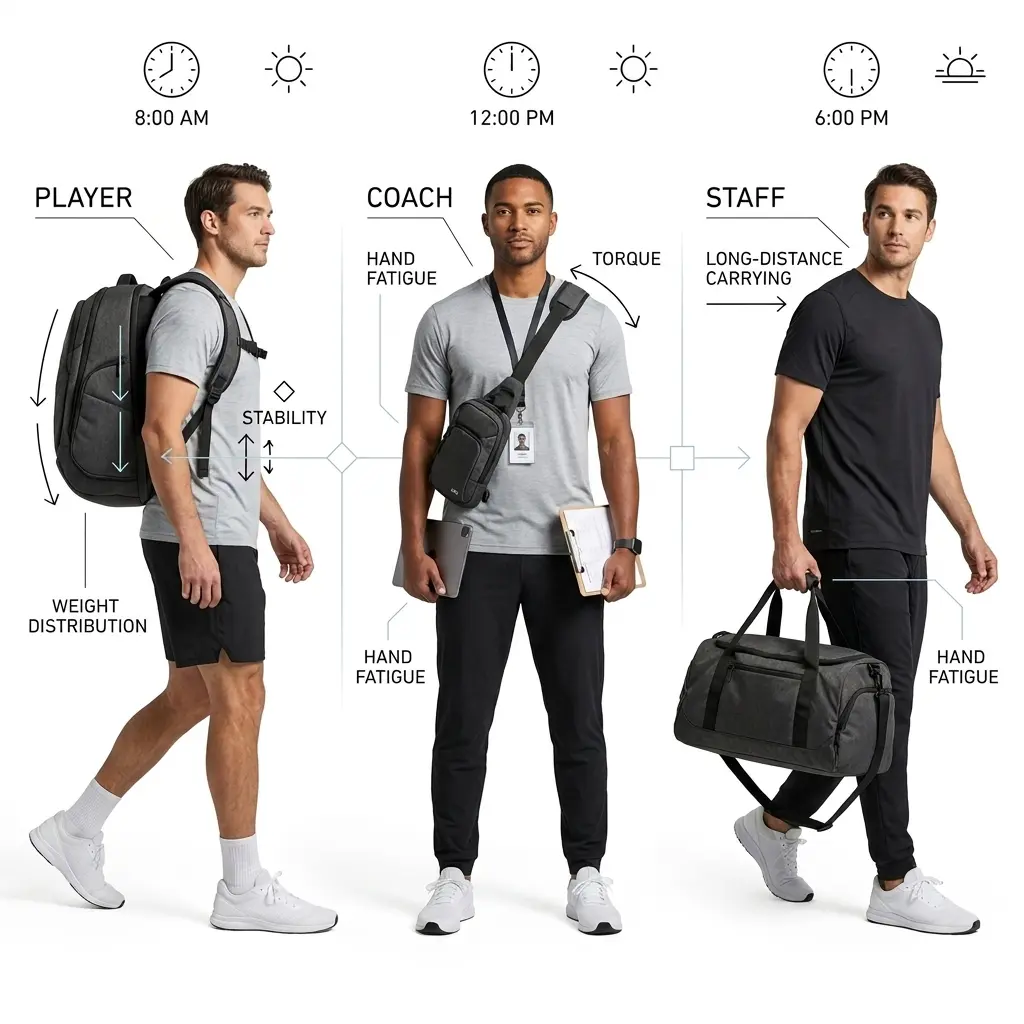
We test bags with real players, staff, and organisers across full tournament days – not just in controlled lab conditions. This lets us see how comfort, fatigue, and carry habits actually change from first match to final game.
Load Mapping
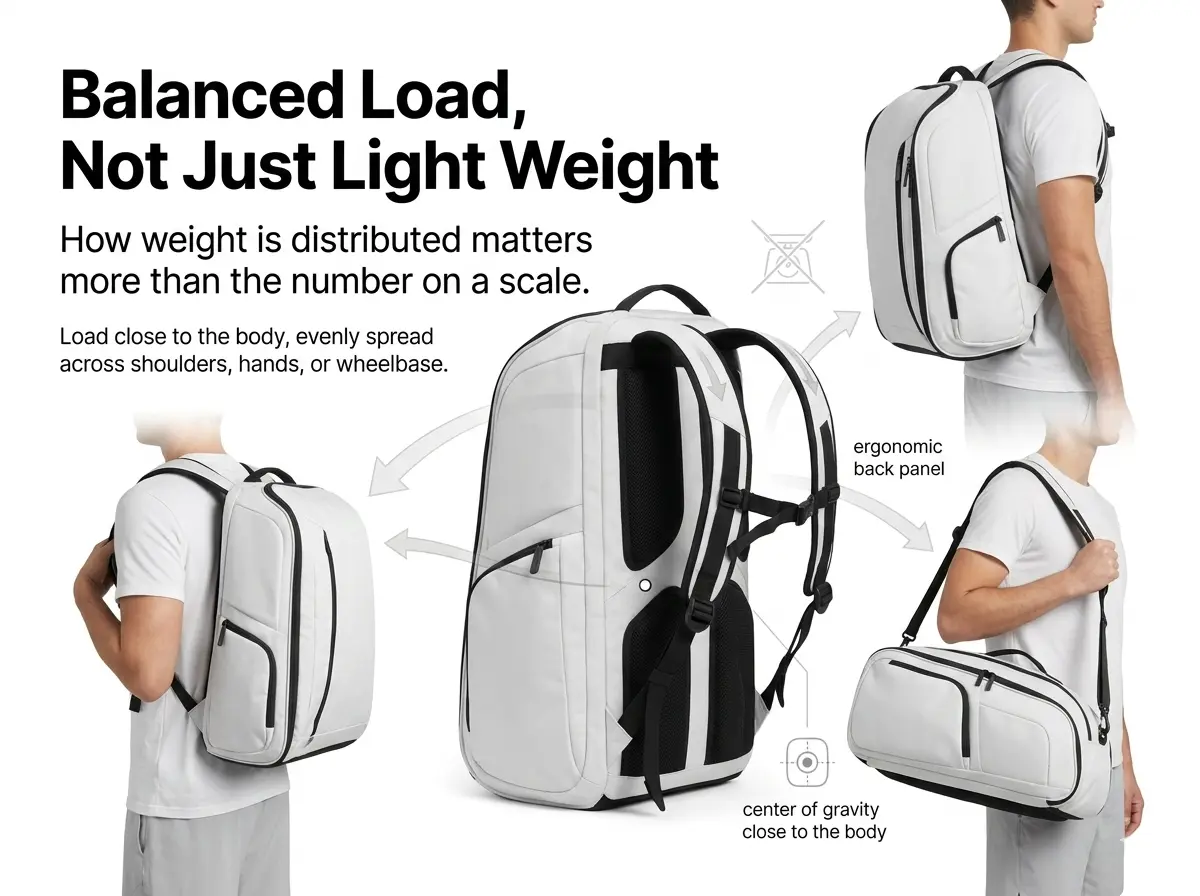
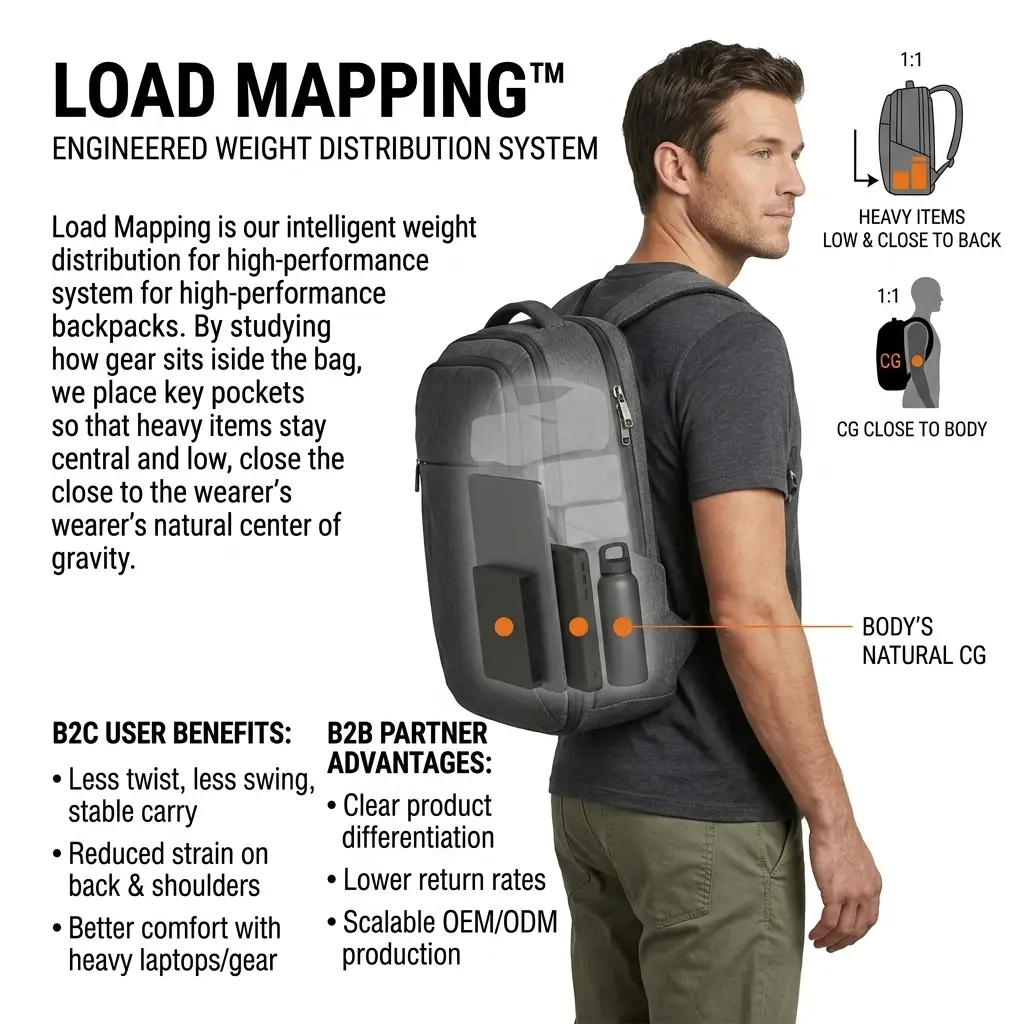
We study how gear sits inside the bag and place key pockets so weight stays central and low, close to the body's natural centre of gravity. That means less twisting, less swinging, and a more stable carry when the bag is fully loaded.
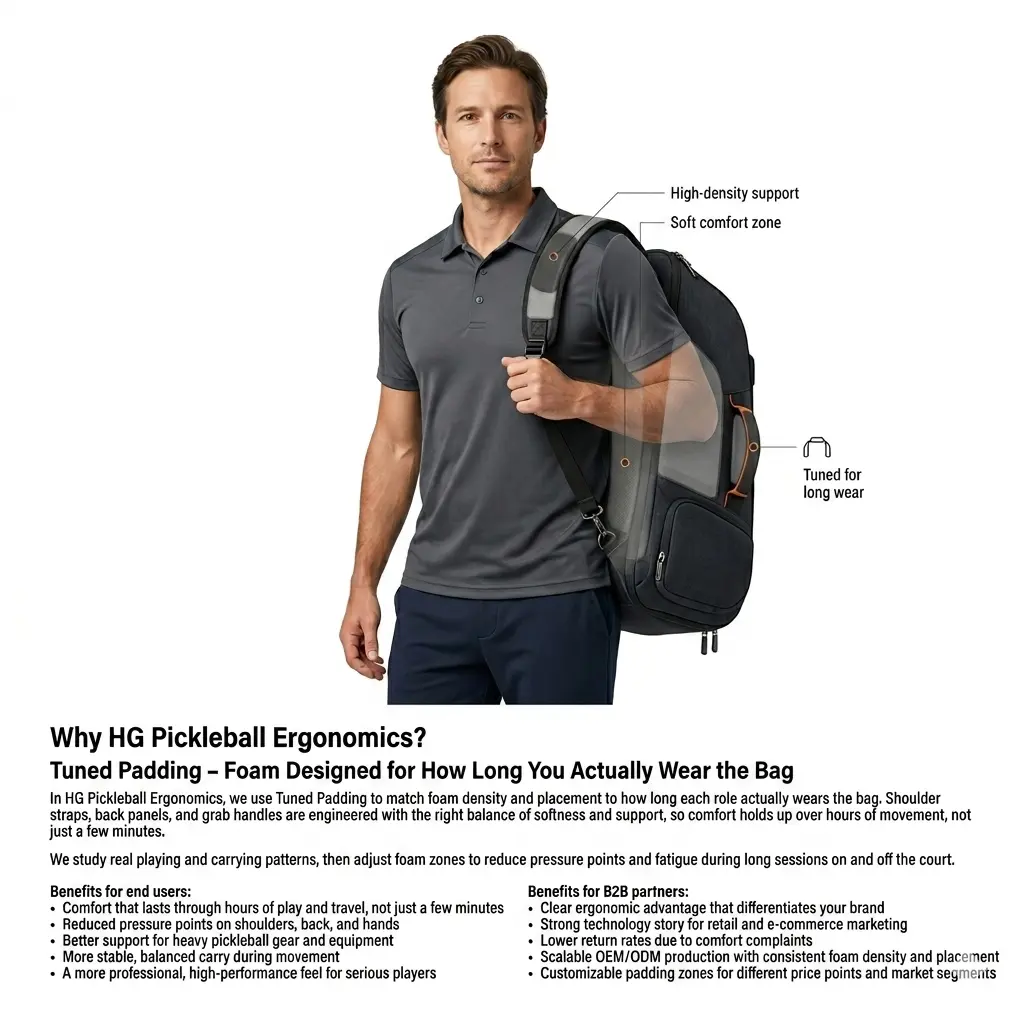
Tuned Padding
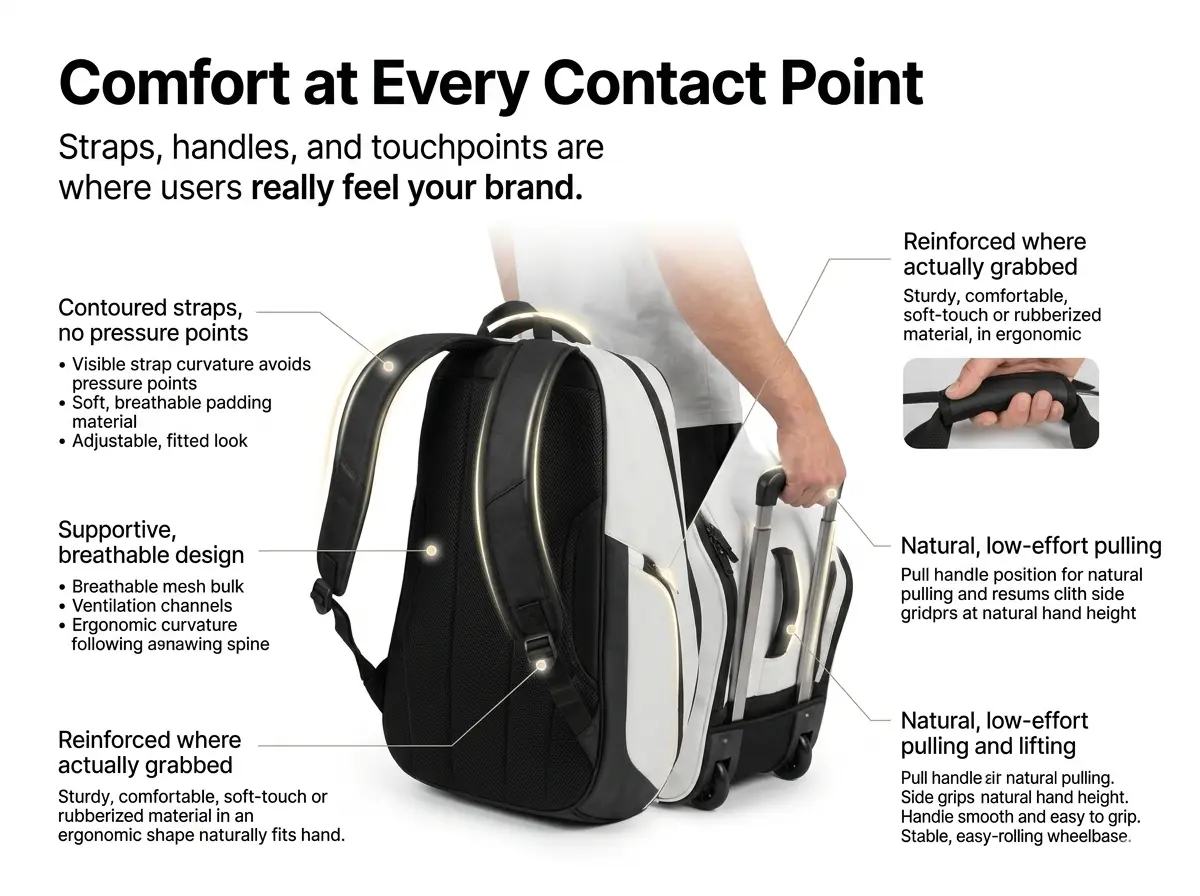
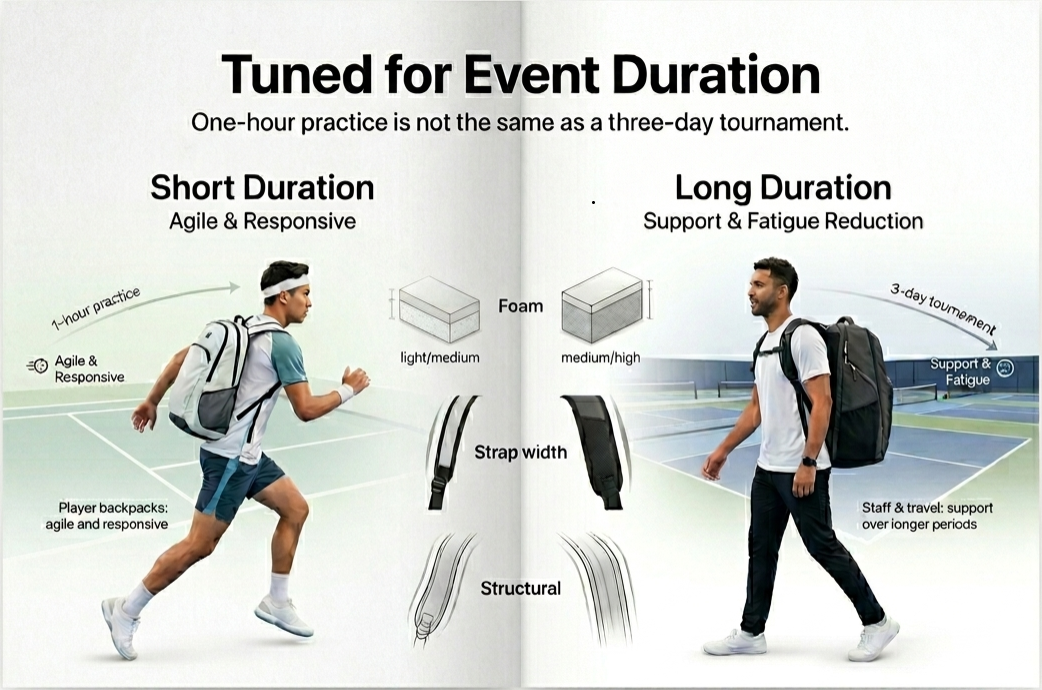
Foam density and placement are tuned to how long each role actually wears the bag. Straps, back panels, and grab handles get the right balance of softness and support, so comfort holds up over hours of movement, not just a few minutes.
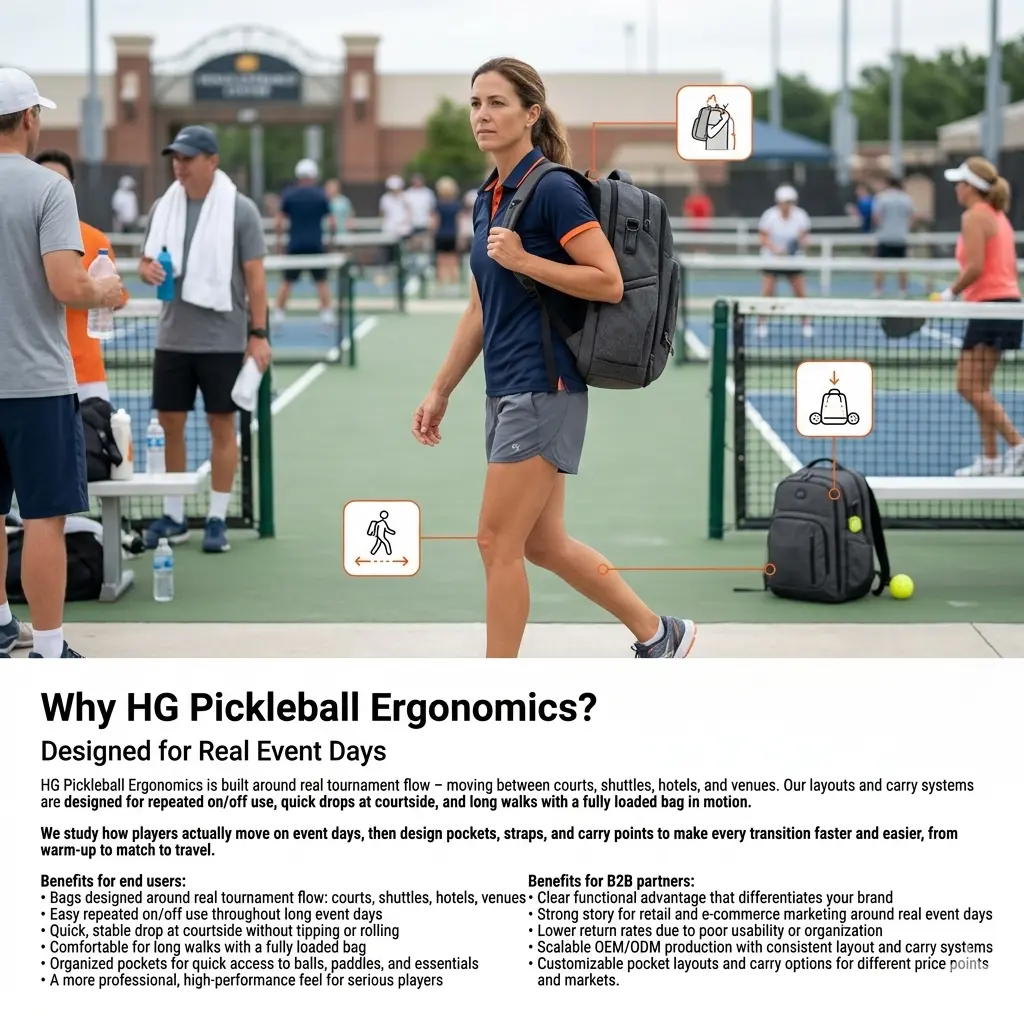
Designed for Real Event Days
Layouts and carry systems are built around real tournament flow – moving between courts, shuttles, hotels, and venues. We design for repeated on/off use, quick drops at courtside, and long walks with a fully loaded bag in motion.
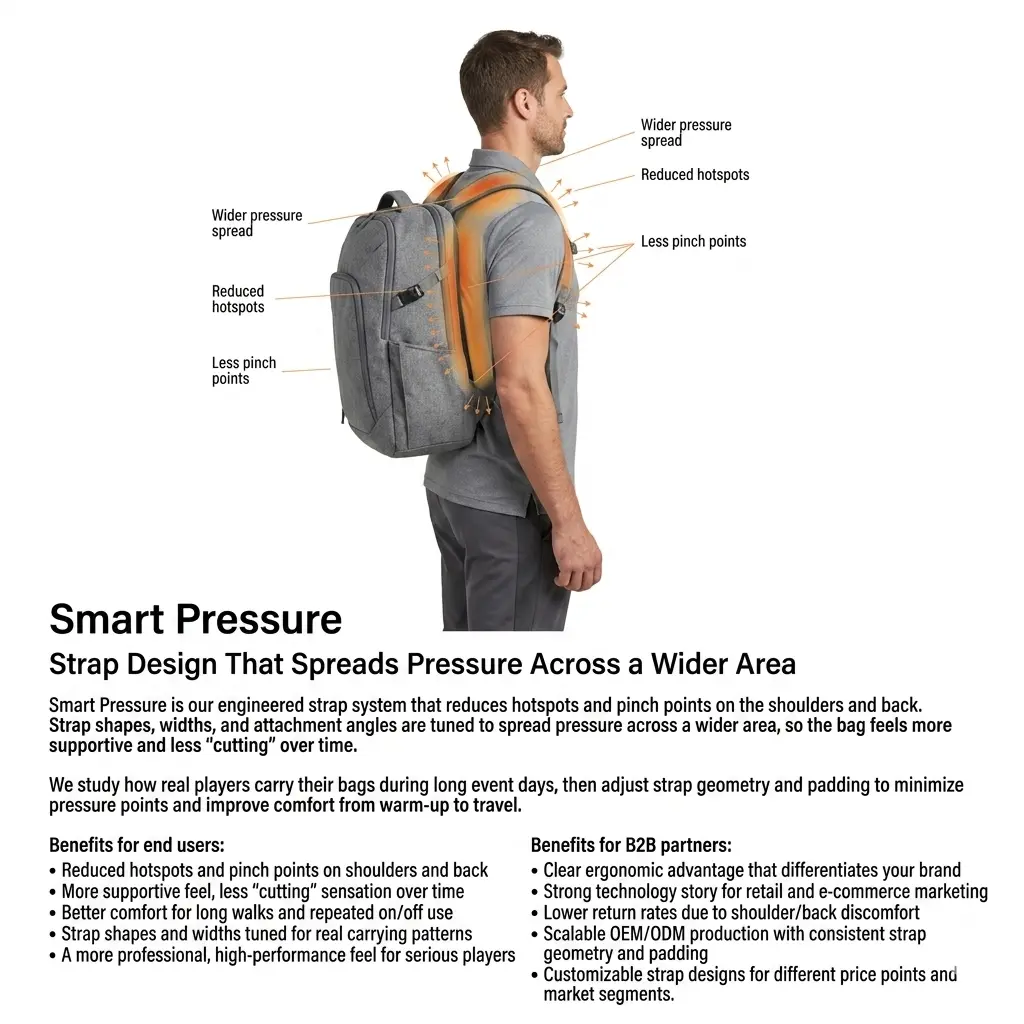
Smart Pressure
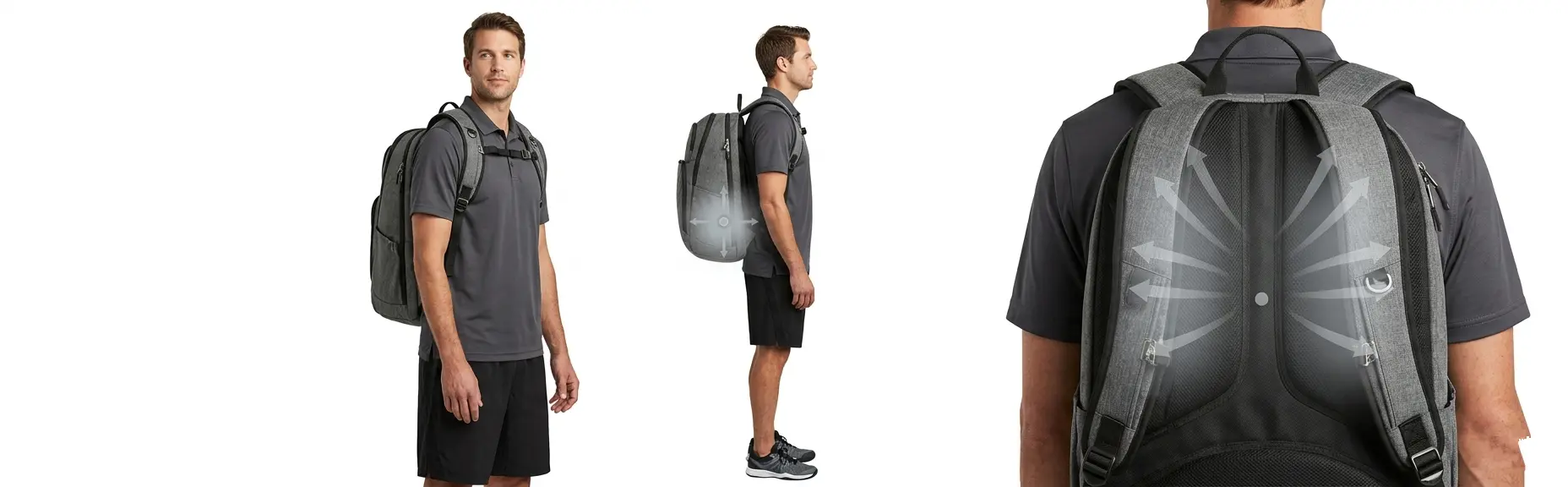
Strap shapes, widths, and attachment angles are tuned to spread pressure across a wider area of the shoulders and back. This reduces hotspots and pinch points, so the bag feels more supportive and less "cutting" over time.
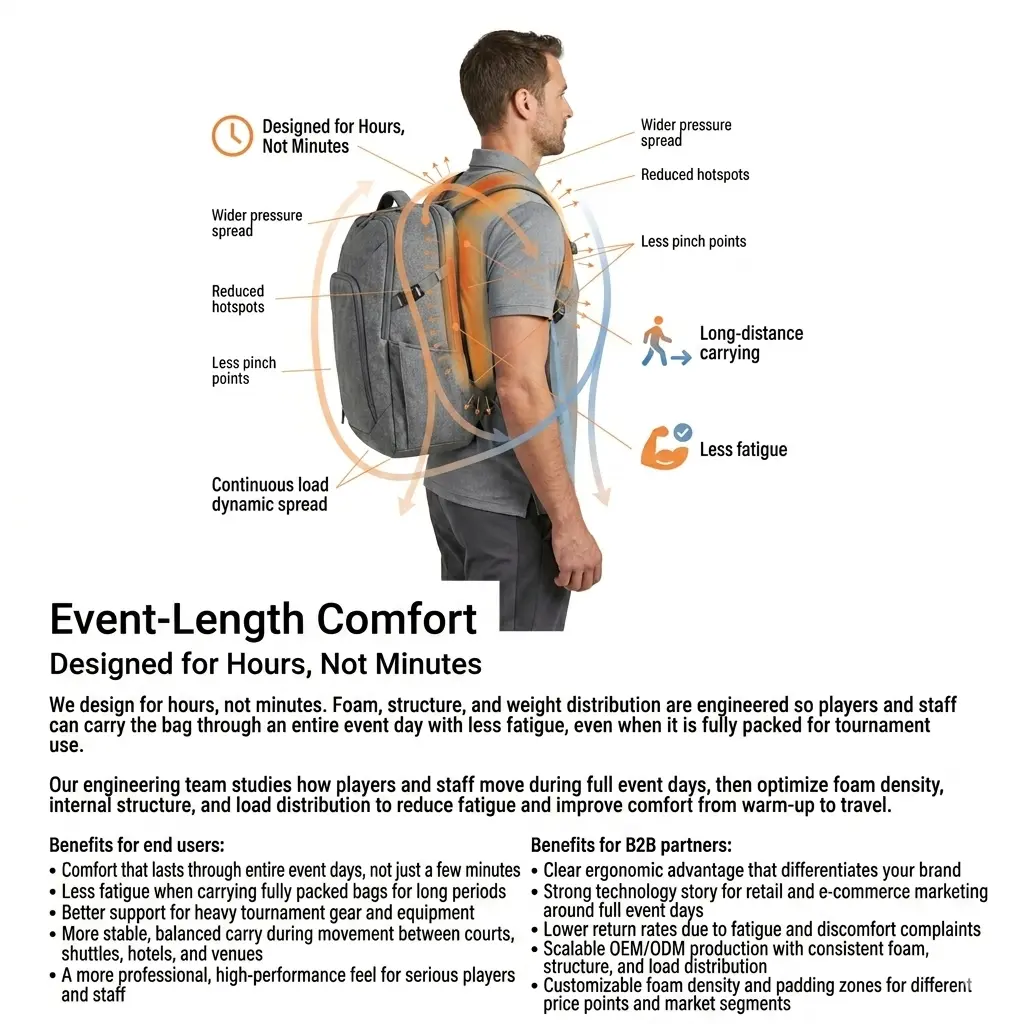
Event‑Length Comfort
We design for hours, not minutes. Foam, structure, and weight distribution are engineered so players and staff can carry the bag through an entire event day with less fatigue, even when it is fully packed for tournament use.
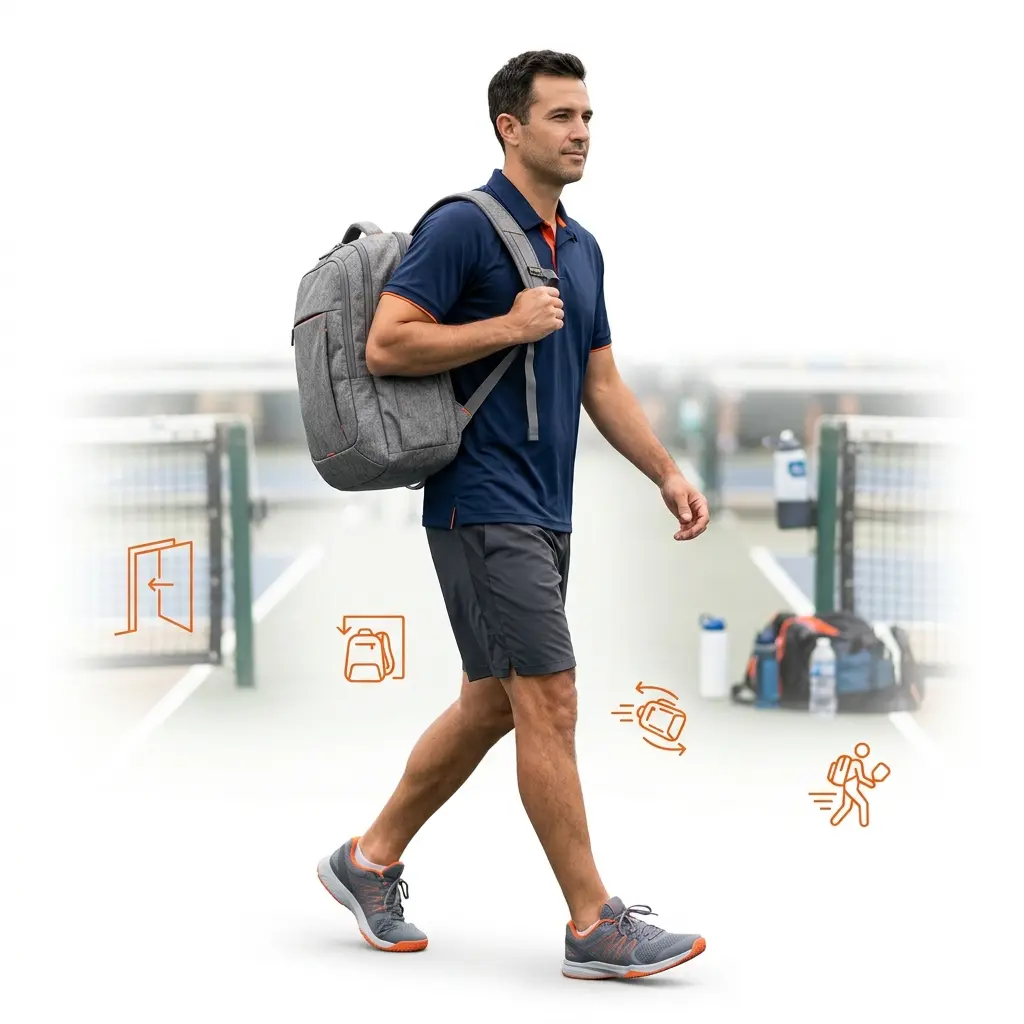
Role‑Specific Design
Each bag is shaped around the way a specific user actually carries it, whether that means walking courtside, moving through a venue, or travelling between events with a full load.
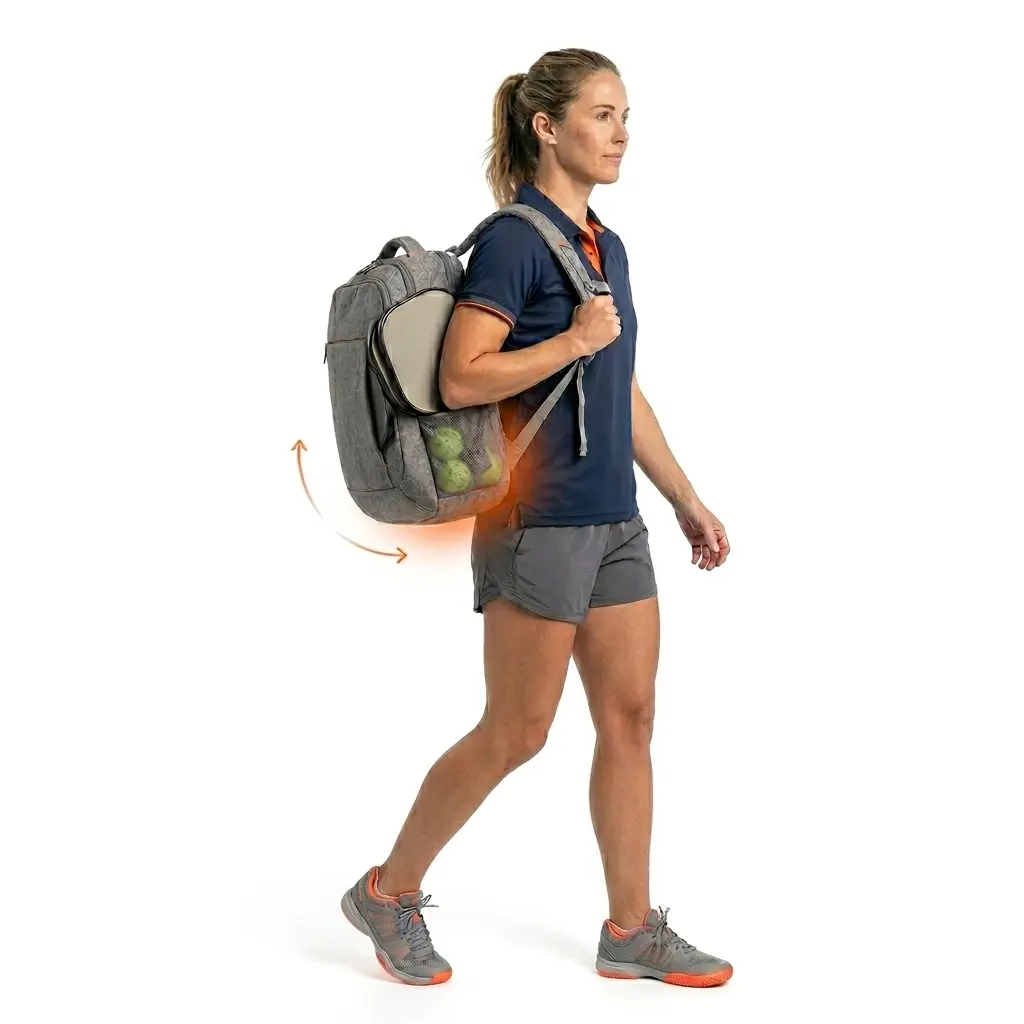
Dynamic Load Shift
We place compartments and structure to keep the load stable as the bag moves, helping it stay balanced when users walk, turn, lift, or set it down throughout the day.
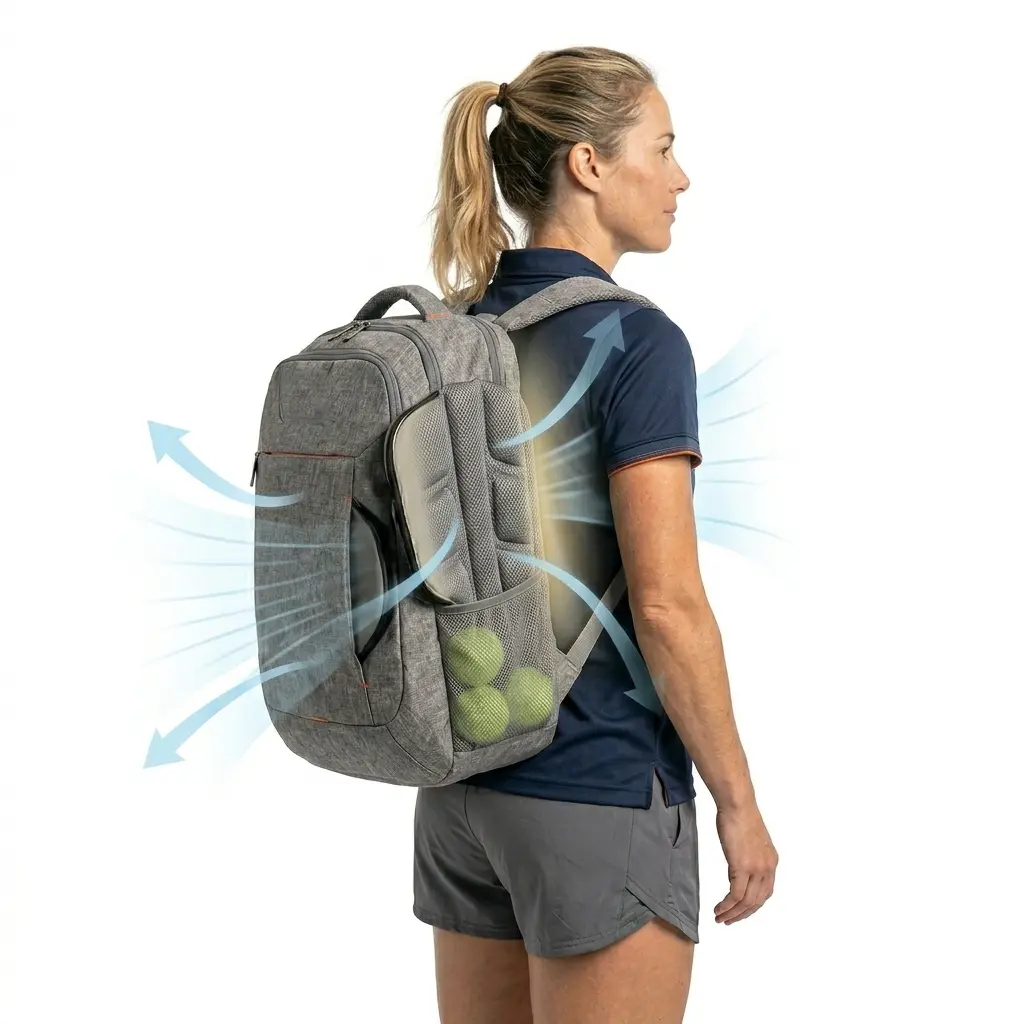
Ventilated Support
Back panels and contact areas are built to support the body without trapping too much heat, helping the bag stay more comfortable during long event days in warm conditions.
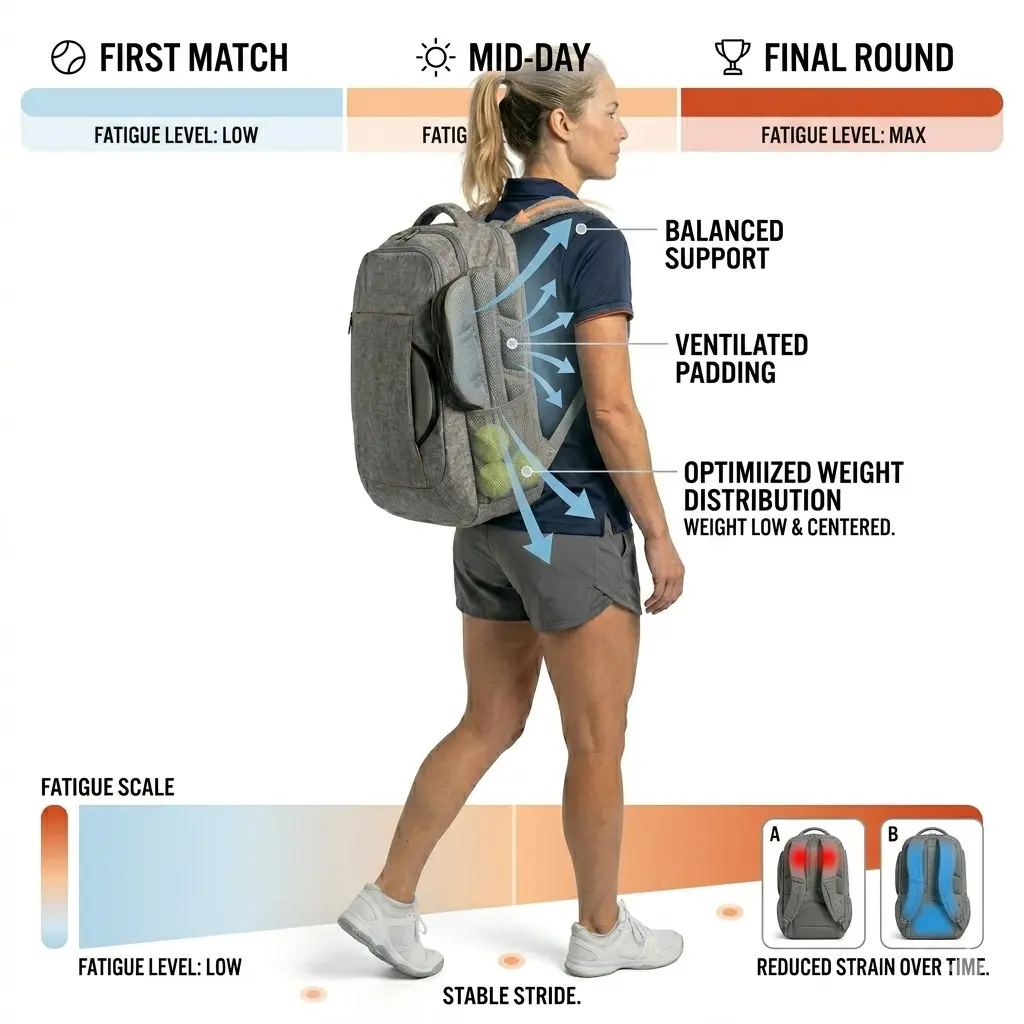
Fatigue Reduction
By balancing support, padding, and weight distribution, we reduce strain over time so the bag feels easier to carry from the first match to the final round.
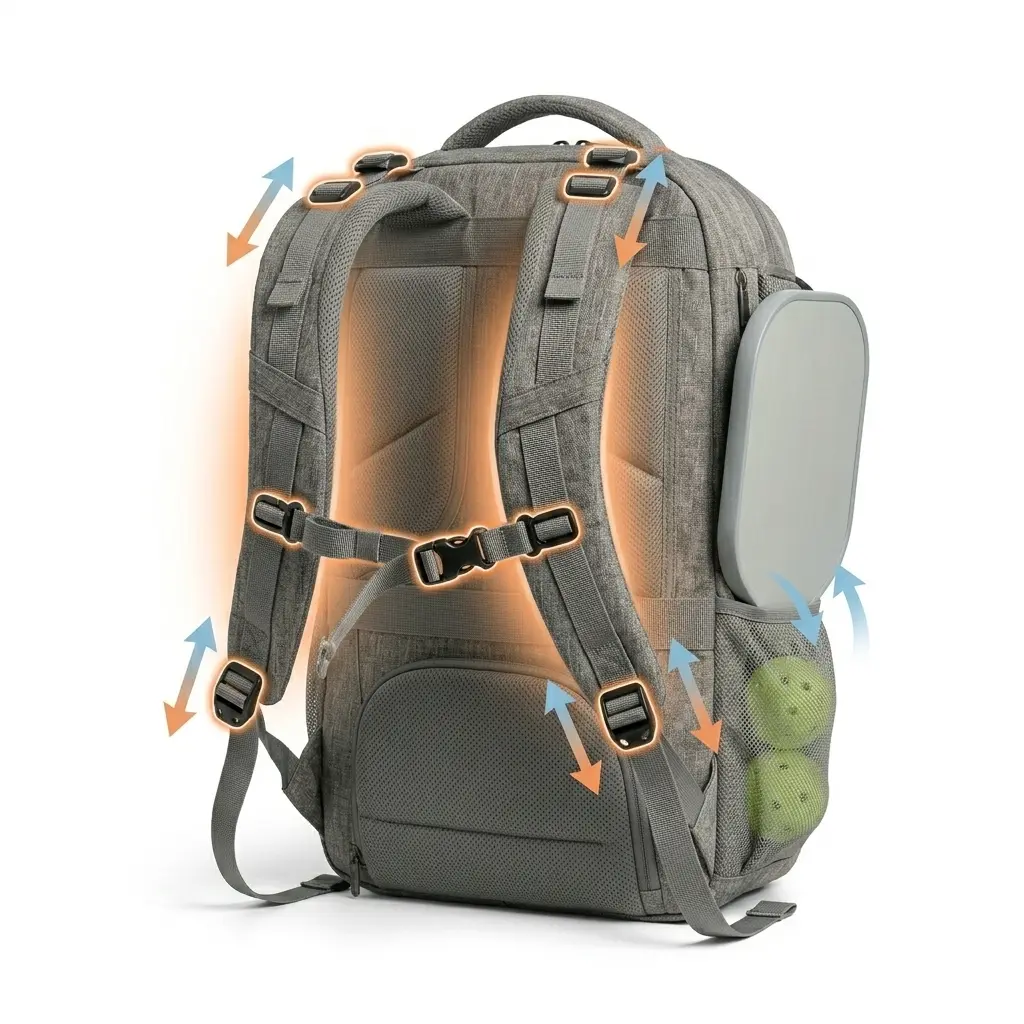
Quick‑Adjust Harness
Straps can be adjusted quickly on the move, helping users fine-tune fit and carry balance as conditions, load, or travel needs change throughout the day.
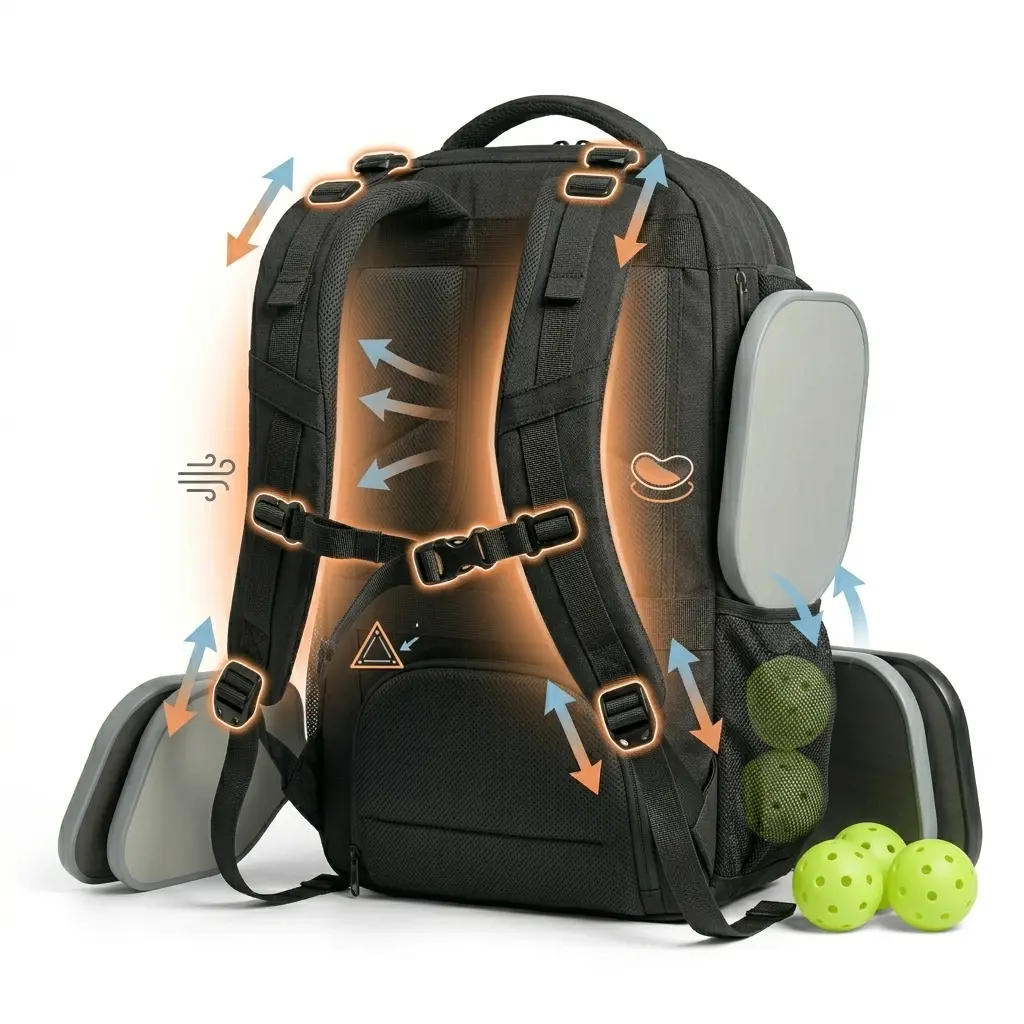
Modular Back System
The back panel is designed to support different carrying needs with a structure that can be adapted for comfort, airflow, and stability across multiple use cases.
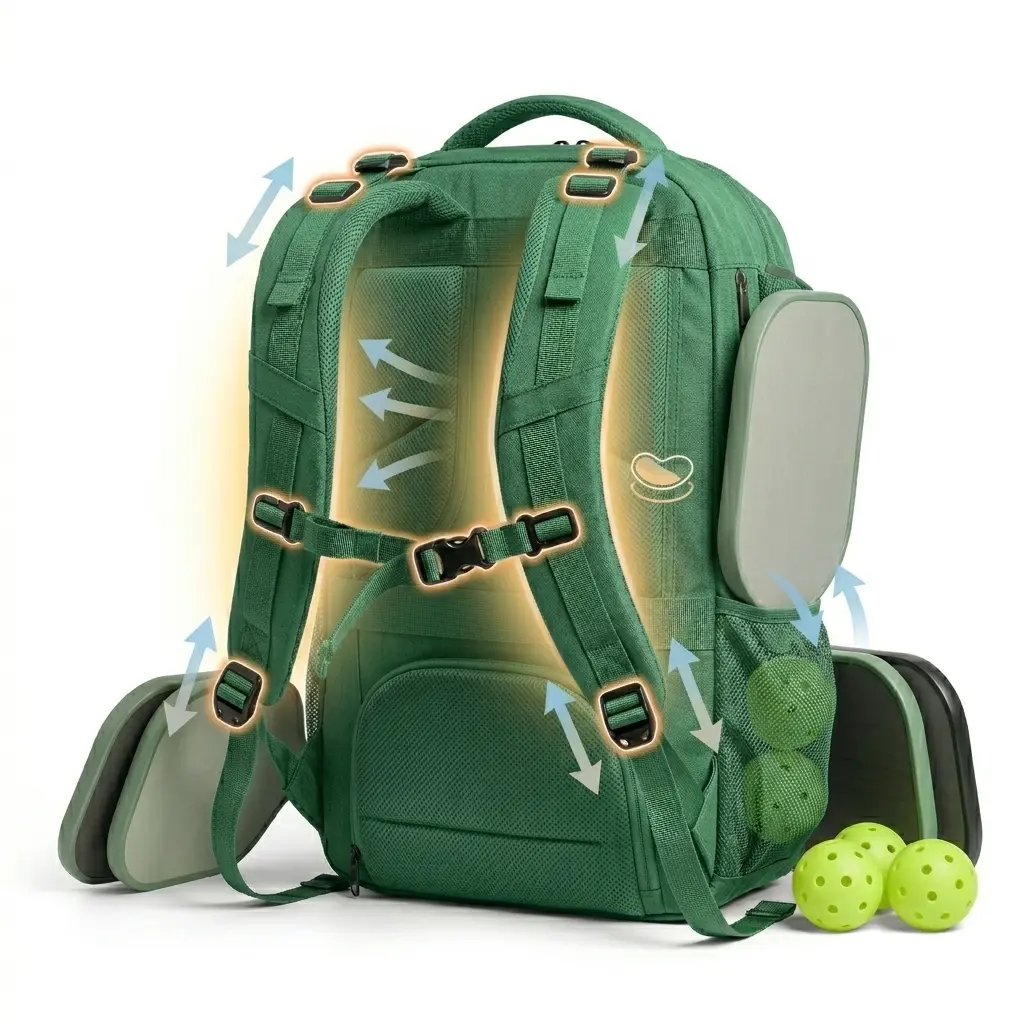
All‑Day Climate Control
Breathable materials and airflow-friendly construction help reduce heat build-up, keeping the carry experience more comfortable during long tournaments and warm conditions.
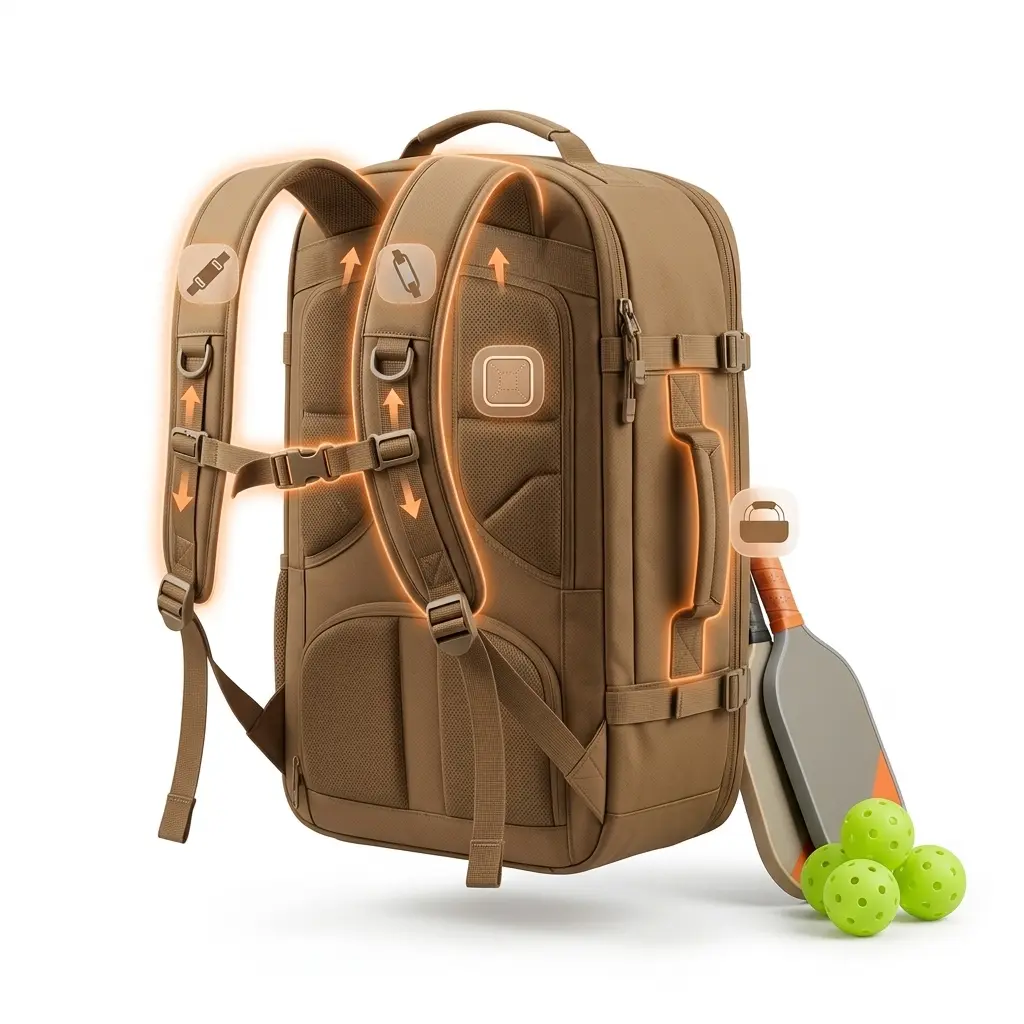
Customizable Contact Points
Shoulder straps, back padding, and grip areas can be tuned to match different user preferences, helping create a more personal and comfortable carry feel.
1. How do you decide the optimal weight distribution for a bag?+
We start from real usage scenarios: what users carry, how much they carry, and how long they carry it. We optimize weight distribution in key areas (shoulder straps, back panel, bottom), keeping the center of gravity closer to the body to reduce pressure on shoulders and back. This balance is validated through ergonomic engineering, not arbitrary design.
2. What should be the target self-weight for a backpack?+
For daily use and moderate load, we recommend backpack self-weight between 0.8–1.2kg; for high-intensity use and heavy load, we use more robust materials, self-weight may be 1.2–1.8kg. The key is balancing durability and weight, ensuring the bag is not too light and less durable, nor too heavy and uncomfortable for long-term use.
3. How do shoulder straps and back panel design affect comfort?+
Shoulder strap width, thickness and curvature directly affect shoulder pressure distribution; back panel cushioning and breathability affect back comfort and long-term use experience. We design different shoulder strap and back panel specifications based on load weight and usage duration: wider and thicker straps for heavy load, lighter and more breathable back panel for daily use.
4. What should be the load capacity for a bag?+
For player bags, we design load capacity of 3–6kg (including 3–4 paddles and personal items); for coach bags, 6–10kg (including multiple paddles and training equipment); for staff bags, 4–8kg (including credentials, tools and event materials). Load capacity is directly related to material strength, shoulder strap design and structural balance, and we determine based on actual usage needs.
5. How do you balance durability and lightweight?+
We use high-durability materials in key areas (bottom, zippers, shoulder straps) and lighter materials in non-key areas (back panel, side walls). This layered design keeps the bag durable without unnecessarily increasing weight. We also provide different weight-level material options based on target price and load requirements.
6. For long-term bag carrying, how do you reduce body pressure?+
We reduce body pressure through three optimizations: center of gravity closer to the body, shoulder strap width distributing pressure, and back panel cushioning protecting the back. For long-term carrying (such as events, travel), we recommend using wider shoulder straps (≥5cm) and thicker back panel cushioning (≥1cm), and ensuring the bag's center of gravity is above the waist.
7. How does ergonomics design differ for different age users?+
For the main user group aged 30–60, we design moderate shoulder strap width, back panel cushioning and weight distribution, balancing comfort and durability. For younger users, we can use lighter materials and more modern designs; for older users, we use wider shoulder straps and thicker cushioning to reduce body pressure.
8. How do we start a project focused on ergonomics and weight?+
You can use the form on this page to tell us your target users, carrying duration, load weight and brand positioning. We will provide structure solutions, weight optimization plans and construction details based on your needs, helping your brand start from ergonomic design and build a comfortable, reliable product line.